Why Early Spring Is the Most Important Time to Assess Your Landscape Design, Drainage, and Outdoor Living Spaces
There is a specific moment every April in Ontario when the illusion disappears. The snow recedes, the frost lifts, the grass rises, or fails to. And suddenly, your landscape design is no longer softened by winter. It is fully visible.
This is when homeowners see their property clearly again. Where water pooled during spring thaw. Where interlock shifted under freeze thaw pressure. Where lawn areas thinned. Where garden beds didn’t survive the season. Where pathways feel slightly uneven. Where the yard feels disconnected from the house itself. April is not just the beginning of spring landscaping season. It is the most honest month of the year for your property. And that honesty is incredibly useful.
Winter Always Leaves Evidence
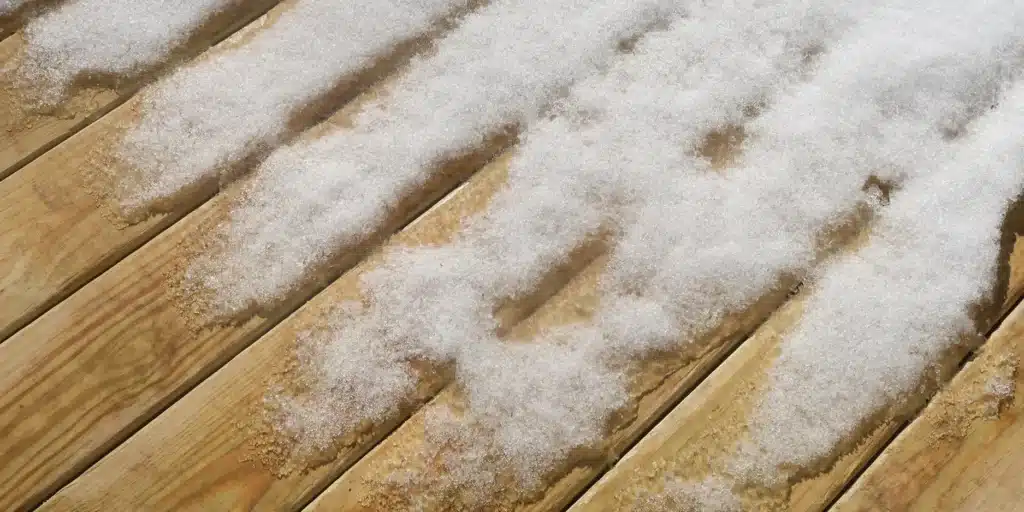
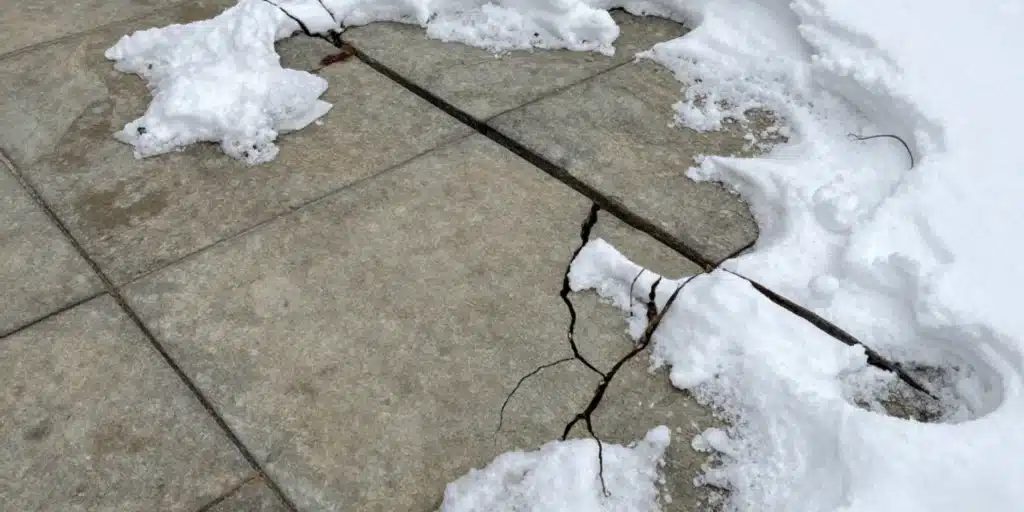
Ontario winters test residential landscaping in ways many homeowners underestimate. Repeated freeze thaw cycles cause soil expansion and contraction. Snow load compresses turf. Ice shifts pavers and natural stone. Saturated ground exposes grading weaknesses and drainage flaws. By the time April arrives, the evidence is there.
Patios may look intact at first glance, but subtle settling becomes visible when you walk across them. Driveways show slight dips where water collects. Retaining walls may reveal minor separation that wasn’t obvious in autumn. Lawn areas that looked lush in September may now show patchy recovery where compaction or poor drainage restricted root health. Early spring landscaping assessment is not about cosmetic repair. It is about understanding how your property performed under pressure. And winter always tells the truth.
Drainage Is the First Thing to Evaluate
If there is one factor that determines the long term success of landscape construction in Ontario, it is drainage. April rainfall combined with melting snow creates the clearest picture of how water moves across your property. This is when you can see whether grading is directing water away from your foundation, whether patios are shedding moisture properly, and whether garden beds are holding more water than they should. Standing water near the house is not simply an inconvenience. Over time, it can affect foundations, interlock stability, plant health, and soil structure. Soggy lawn sections often indicate compaction or improper slope. Erosion around edges of hardscaping suggests that runoff patterns were not fully accounted for during the original installation.
Professional landscape design and build projects always begin with water management. Before new plantings, before decorative features, before outdoor kitchens or pool installations, drainage must function correctly.
April is the only month when you can truly observe this in real time.

Hardscaping Reveals Its Performance
When snow covers your yard, everything looks smooth and uniform. Once it melts, hard-scape details become visible again. Interlock patterns show their alignment. Joint sand loss becomes noticeable. Natural stone coping reveals minor shifting. Steps either feel solid underfoot or slightly unstable. Driveways may appear level, but subtle pooling tells another story.
Hardscaping is not decorative surface treatment. It is structural infrastructure. Patios, walkways, retaining walls, and pool decks are engineered systems designed to perform through extreme seasonal cycles.
Spring is when you evaluate performance, not just appearance. Small adjustments made in April can prevent large scale repairs later in the season. Re-leveling, re-sanding, reinforcing edge restraints, and correcting minor slope inconsistencies are far more efficient now than after another full year of seasonal stress!
The Design Question: Does Your Yard Feel Connected?
Beyond technical performance, April also reveals something less tangible but equally important: flow.
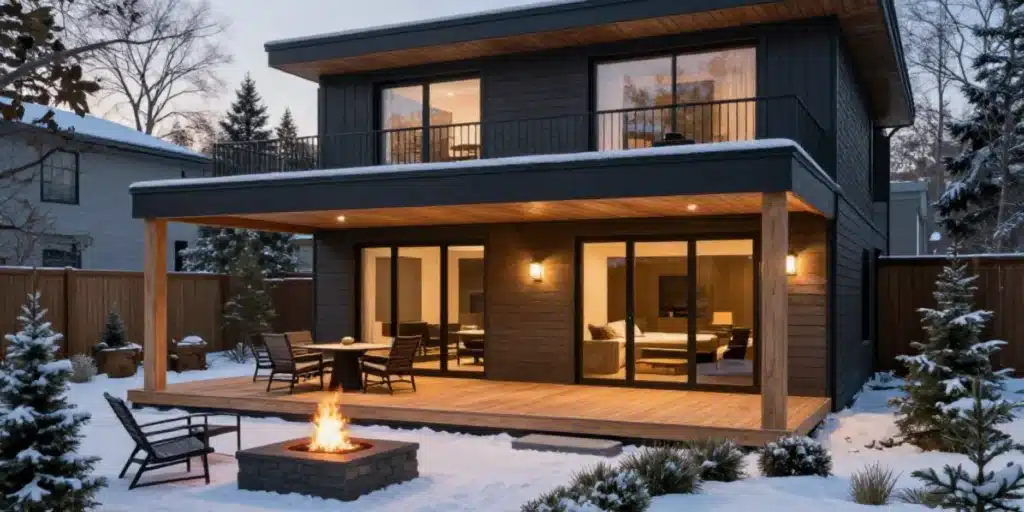
Without dense foliage to soften edges, you can clearly see how your outdoor living spaces relate to your home’s architecture.
Does the patio feel proportionate to the scale of the house?
Does the pathway guide you naturally to the entrance?
Does the backyard feel like an extension of your interior living space, or does it feel segmented and disconnected?
Many homeowners assume they need more features like a fire pit, a pergola, a larger deck, when in reality the issue is cohesion. Landscape design is about movement, transitions, and spatial relationships. A well designed Ontario backyard should support how you live: morning coffee outside, casual evening gatherings, children moving safely between zones, seamless access to pool areas, comfortable seating that feels intentional rather than placed. April allows you to see these spatial relationships clearly, before plant growth hides awkward transitions again.
Observation Before Action
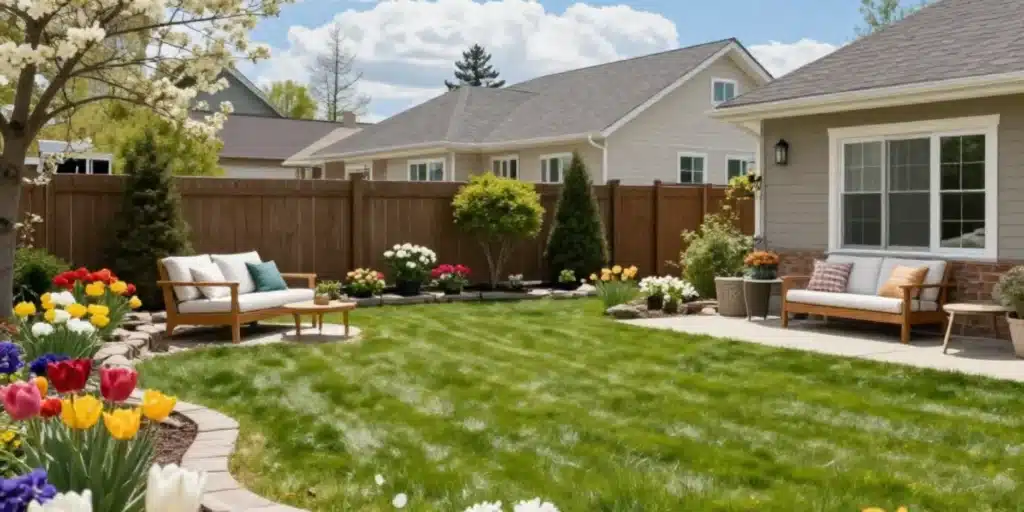
In early spring, it’s tempting to move straight into action. You start booking mulch, replacing shrubs, pressure washing the patio, and patching thin lawn areas because everything feels urgent once the snow disappears. But quick fixes often cover the surface while the real issue stays underneath. April is more useful when you treat it like an assessment month first. A slow walk around your property can tell you more than any checklist. Where water gathers, where surfaces feel uneven, where the layout feels awkward, and where the yard stops flowing naturally from the house. The best landscape upgrades in Ontario don’t start with a reaction. They start with noticing what the property is actually doing!
Why April Is the Smartest Month to Plan Landscape Upgrades
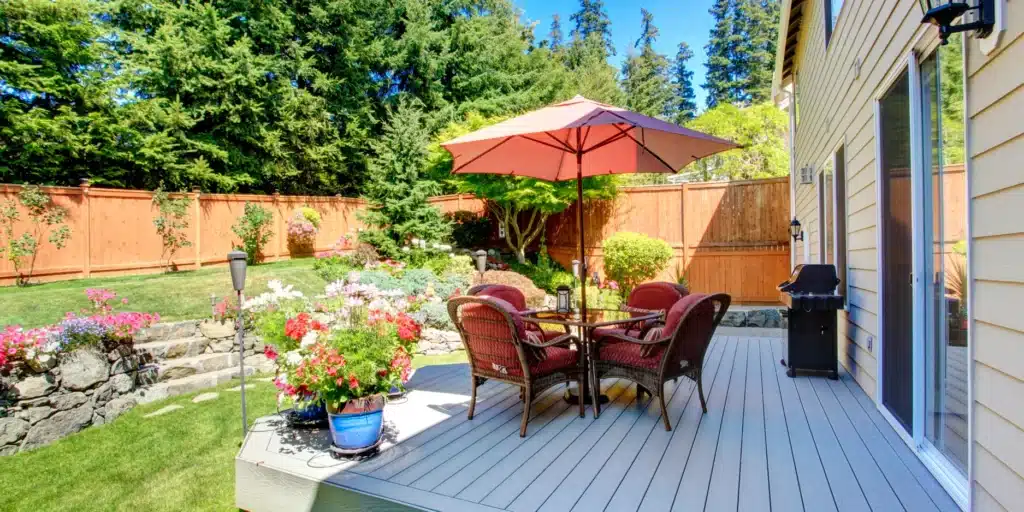
For homeowners thinking about a larger landscape construction project ( whether that means a complete backyard redesign, a new patio installation, retaining wall reconstruction, pool integration, or front yard curb appeal improvements) April provides something incredibly valuable: clarity.
This is when your property is in its most honest condition. You can see exactly how water moves across the lot, where grading needs correction, how hardscaping handles the freeze thaw cycle, and whether lawn areas are truly healthy or simply surviving. That visibility allows decisions to be made based on performance, not frustration.
Early spring is the ideal time to consult with a professional landscape contractor because the design conversation can be grounded in real conditions. Instead of layering patchwork fixes over recurring issues, you can correct grading properly, improve drainage strategically, and redesign the space for long term cohesion and function. Planning in April protects your investment and strengthens long-term property value.
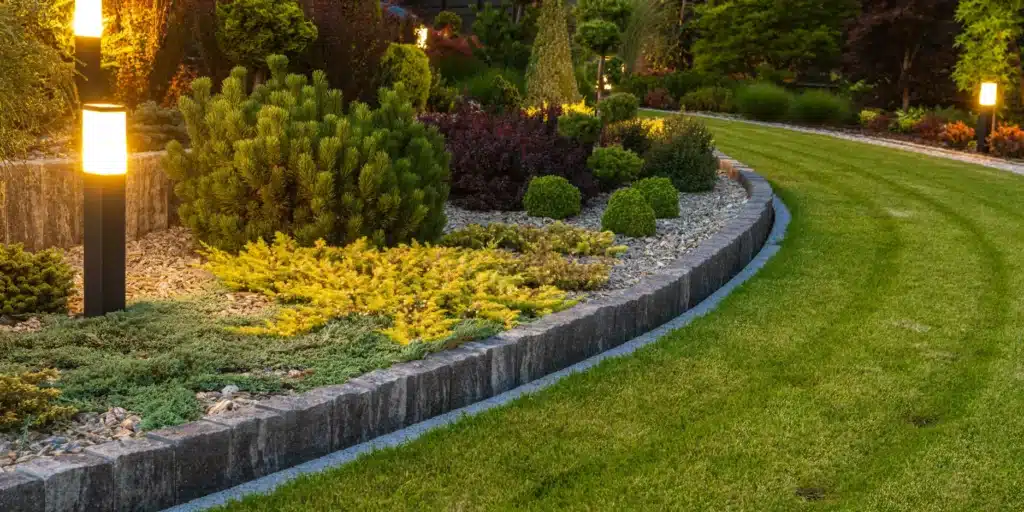
April Isn’t About Cleanup. It’s About Clarity.
April doesn’t criticize your yard, it clarifies it. Once the snow is gone and the ground has thawed, you can see exactly how your landscape construction performed through winter. Drainage patterns become obvious, hardscaping either holds its integrity or shifted, lawn areas reveal their resilience, and the overall layout shows whether it truly supports how you live in the space.
That clarity is valuable. When you understand what your property is showing you, decisions become strategic rather than reactive. Instead of rushing into seasonal refreshes, take the time to observe how your yard actually functions. A careful assessment now leads to smarter upgrades later and stronger long term results. April is simply the month that makes everything visible again.
What April Reveals, We Help You Resolve
Once you’ve seen what your yard is telling you, the next step is acting on it properly. For some properties, that means professional landscape maintenance; correcting minor drainage issues, re-levelling stone, improving soil conditions, and preparing the yard to perform through the season ahead. For others, April reveals bigger opportunities like aging hardscaping, poor flow, or structural concerns that signal it’s time to start planning a full landscape redesign.
If you’re considering a 2026 backyard transformation, now is the right time to begin the design conversation. The strongest landscape construction projects are planned well in advance and built on real site conditions, not rushed decisions.